
· Elena Marsh
Tea steeping times
Steeping charts disagree with each other because they are describing different leaf grades under different names. Here is a working table, and more usefully, what to change when a cup does not taste right.
in US tea sales over 52 weeks, up 2.6% year on year
The table of tea steeping times
| Tea | Water | Time | Second steep |
|---|---|---|---|
| Green | Off the boil, wait 1–2 min | 2–3 min | Yes, add 30 s |
| White | Off the boil, wait 1–2 min | 3–5 min | Yes, add 30 s |
| Oolong | Just under boiling | 3–5 min | Yes, often better |
| Black, whole leaf | Full boil | 3–5 min | Weak |
| Black, broken grade | Full boil | 2–4 min | No |
| Pu-erh | Full boil | 2–4 min | Yes, several |
| Rooibos | Full boil | 5–7 min | Weak |
| Herbal and fruit | Full boil | 5–10 min | No |
Temperature does more than the clock
This is the part most charts bury. Green and white teas are made from young leaf that scalds easily. Water straight off the boil pulls astringency forward before the sweetness has come out, and no amount of careful timing recovers it — you get a bitter cup at two minutes just as surely as at four.
The fix costs nothing. Boil the kettle, then wait a minute or two before pouring, or add a splash of cold water to the mug first. Black tea, rooibos and herbal infusions want the full boil and are unbothered by it; oolong sits just below.
A rough guide without a thermometer
- Straight off the boil: black, pu-erh, rooibos, herbal
- Wait 30 seconds: oolong
- Wait 1 to 2 minutes: green, white
Why tea steeping times change with the equipment
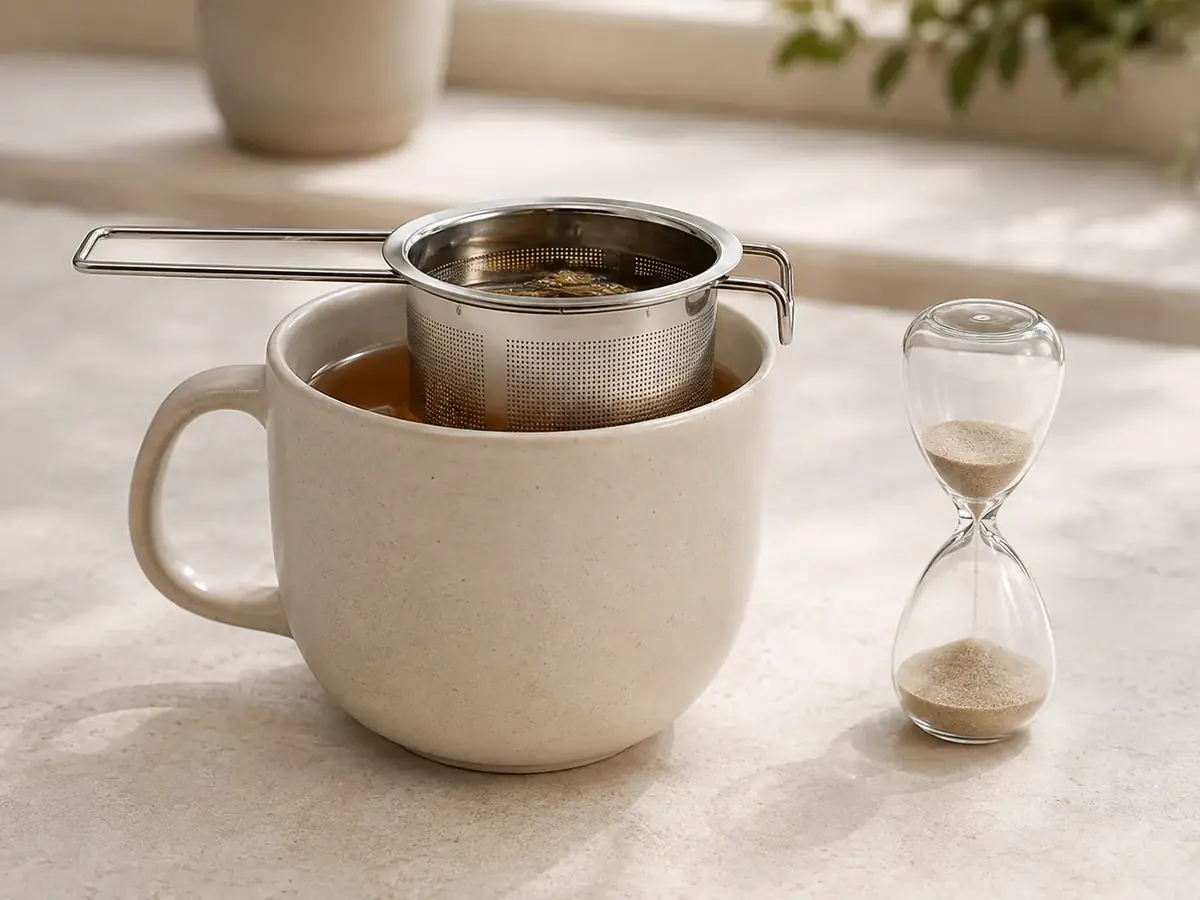
Time assumes the water can reach the leaf. In a cramped infuser it cannot: the leaf swells, packs against itself, and the water channels around the outside. You then extend the steep to compensate, which over-extracts the outer leaf and under-extracts the core — bitter and thin at the same time, which is a genuinely confusing result.
With a basket that leaves headroom the times above behave as written, because the whole leaf is in contact with the water. If your cups are consistently both harsh and weak, look at the infuser before you adjust the clock.
Tea steeping times for second and third steeps
Whole-leaf oolong, white and pu-erh will give a second infusion and often a third. Add roughly thirty seconds each time. The second is frequently the best, because the leaf has only finished opening partway through the first.
Broken-grade black teas and most herbal blends give nearly everything to the first cup. That is not a fault of the tea; small particles extract fast by design, which is why they are used in bags.
Fixing a cup
Bitter
Too long, or water too hot. Cut thirty seconds first. If it is a green or white tea, drop the temperature before touching the time.
Thin
Not enough leaf, or not enough room for it. Check the dose against our guide to leaf per cup, then check the infuser.
Flat and lukewarm
An uncovered mug loses several degrees in the first minute. Put the lid on. In a glass teapot the same rule applies and matters more, because the volume is larger and the steep longer.
Cold brew ignores the usual tea steeping times
Cold water extracts slowly and pulls far less of what carries bitterness, so a tea that is unforgiving hot becomes soft and sweet cold. Use about half again as much leaf and leave it six to twelve hours in the fridge. There is no way to over-steep it in that window, which makes it the most forgiving method there is.
Timing without a timer
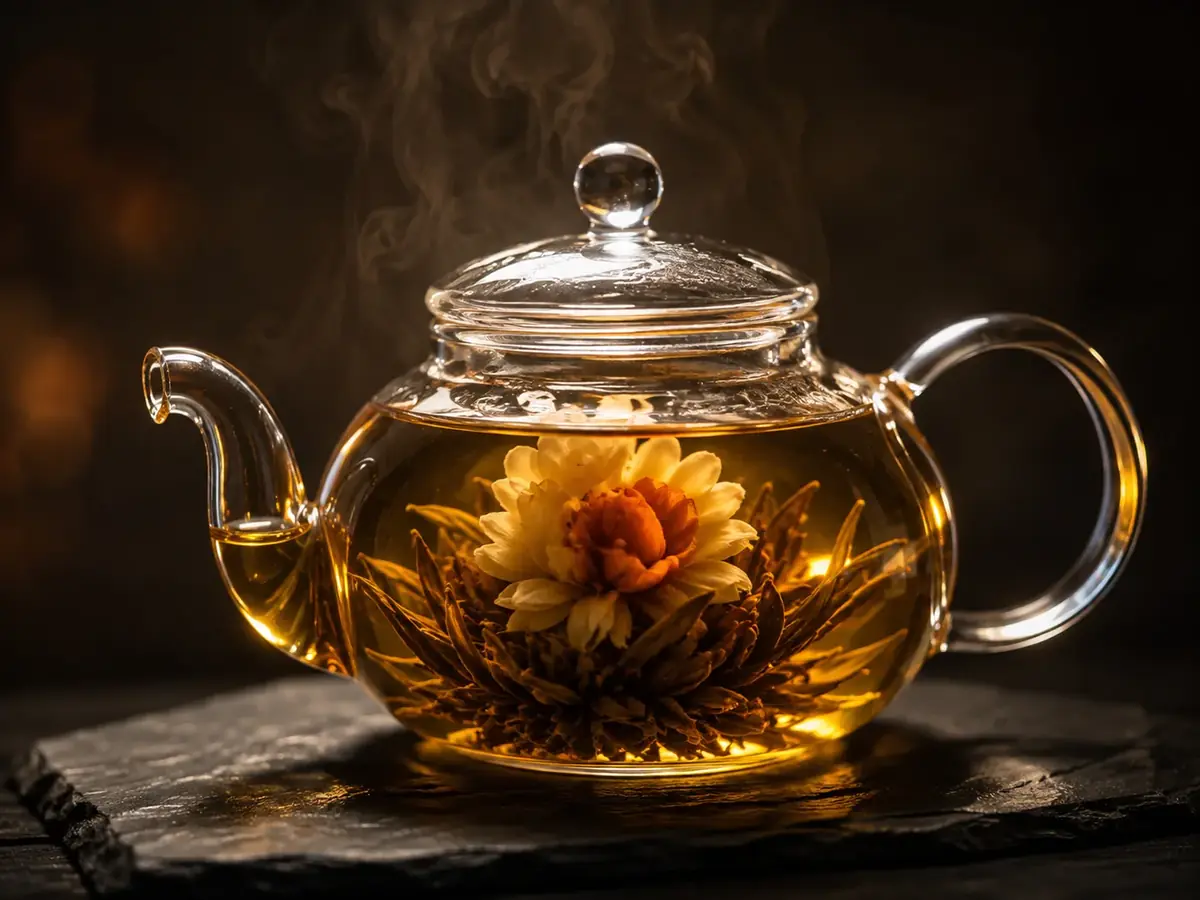
Most people stop using a timer within a month, and they get better cups for it. Two things replace it. Color is the first: in a glass pot you can watch the brew darken, and after a week you know what your tea looks like when it is ready. Smell is the second, and it works in a mug too — lift the lid at two minutes and again at three, and the difference in aroma is obvious once you have noticed it twice.
Where a timer still earns its place is with a tea you have never brewed, and with green tea, where the window between right and bitter is narrow enough that thirty seconds of distraction spoils the cup.
What over-steeping actually does
The compounds that make tea pleasant come out first — the aromatics and the sweeter notes. Tannins follow more slowly, and they are what dry the mouth and turn a cup harsh. So a steep is not a slider from weak to strong; it is a sequence, and past a certain point you are only adding the second group.
That is why diluting an over-steeped cup does not rescue it. You have not made tea that is too concentrated, you have made tea with the wrong things in it, and adding water spreads them thinner without removing them. Lifting the leaves at the right moment is the only fix, which is the whole argument for an infuser you can pull.
Steeping in a bottle, which changes the rules slightly
In a separation bottle the brew stops when you turn it upright rather than when you lift something out, so the timing is the same but the action is different. Because the leaves stay sealed above the drink afterwards, you can turn it back over later and take a second steep from the same leaf without carrying a wet basket around.
Resteeping later in the day
Leaf left wet for hours goes flat and sour, so a second steep is worth taking within an hour or so rather than after lunch. If you want the second cup later, tip the leaves onto a saucer or the upturned lid so air can get to them rather than leaving them sitting in a puddle at the bottom of the basket.
Steep by taste, not by rule
The table is a starting point. Leaf grade varies far more than any chart admits, and the market keeps moving towards larger whole leaf — leaf tea in North America is projected to grow 5.85 percent a year through 2031 (Mordor Intelligence, North America Tea Market, 2025). Taste at the low end of the range, then decide. Adding a minute is easy; taking bitterness back out is not.

Elena Marsh · Founder, Teabrim
Elena set up Teabrim after years of brewing loose leaf in a kitchen that never had the right basket. She writes the Teabrim brewing guides.